Code: 10204
VORT ANGOL K
Max. Airflow140 m³/h
Max. Pressure157 Pa
Power35 W
Speed2180 rpm
Voltage220–240 V
IPIPX2
ANGOL K is a compact centrifugal fan family for 100 mm duct systems. Its UV-resistant casing, centrifugal impeller and pressure-oriented design suit ducted extract from toilets, bathrooms and showers. The range includes standard, R and timer-equipped RT variants.
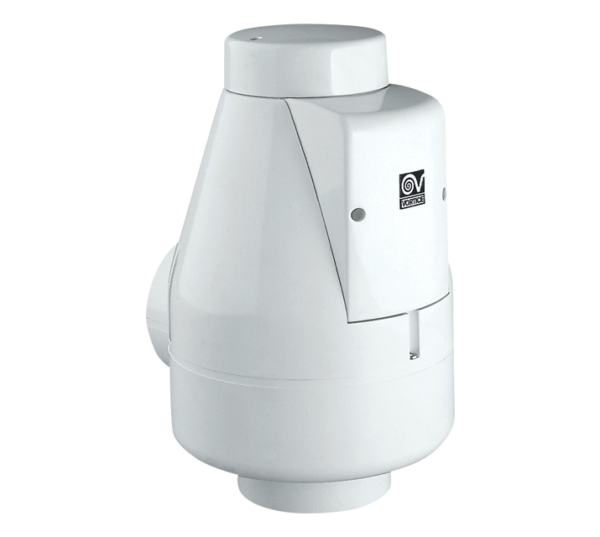
ANGOL K is a compact centrifugal fan family for 100 mm duct systems. Its UV-resistant casing, centrifugal impeller and pressure-oriented design suit ducted extract from toilets, bathrooms and showers. The range includes standard, R and timer-equipped RT variants.
Designed for ducted extraction from toilets, bathrooms and showers where the fan must overcome duct pressure losses. Its casing arrangement offers a different routing option from the straight-through AXIAL K.
Part of the same K family as AXIAL K, but differentiated by its ANGOL casing arrangement and R/RT variants. Detailed two-speed data are published for the standard 10204 model; for R and RT, the current Vortice Fan Selection pages confirm maximum airflow but do not expose the remaining electrical/performance values in a detailed table.
3 verified model/variant
The current Vortice Fan Selection page confirms 140 m³/h maximum airflow. The remaining numerical performance/electrical values are not exposed in a current detailed table, so no legacy or third-party values were copied.
The RT variant includes a timer. The current Vortice Fan Selection page confirms 140 m³/h maximum airflow; other numerical values are not exposed in a detailed current table, so no estimates were used.
Contact Vensis for model selection, technical suitability and quotation.